Did you come here on purpose? If so, great! So who am I and what am I the author of?
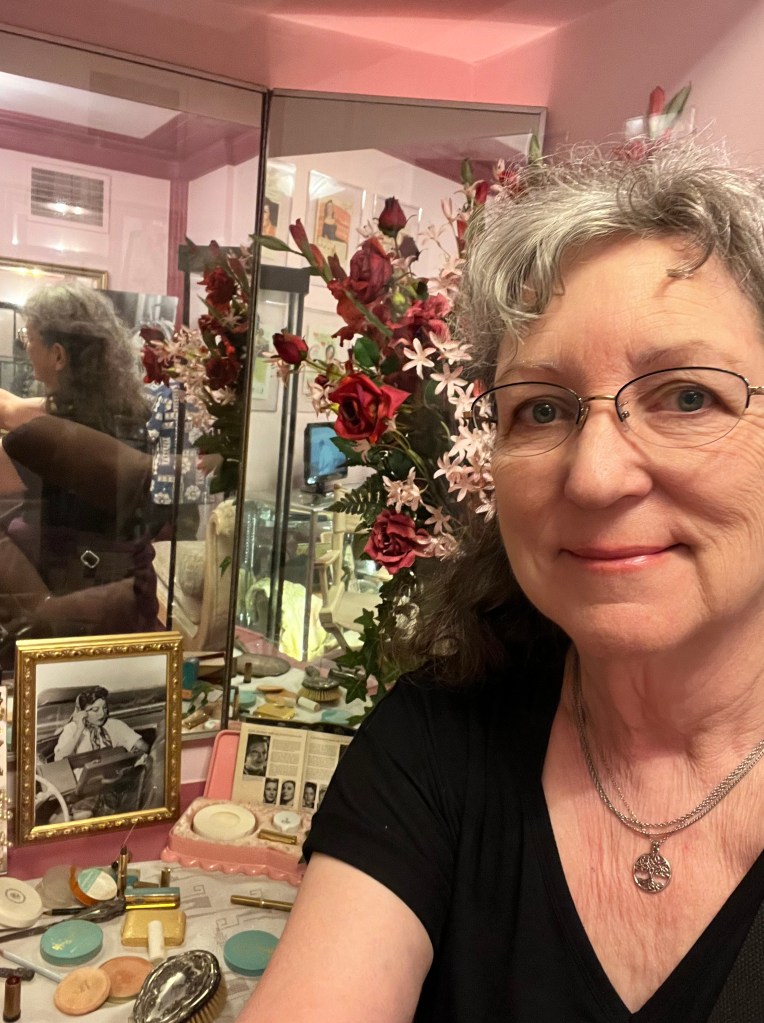
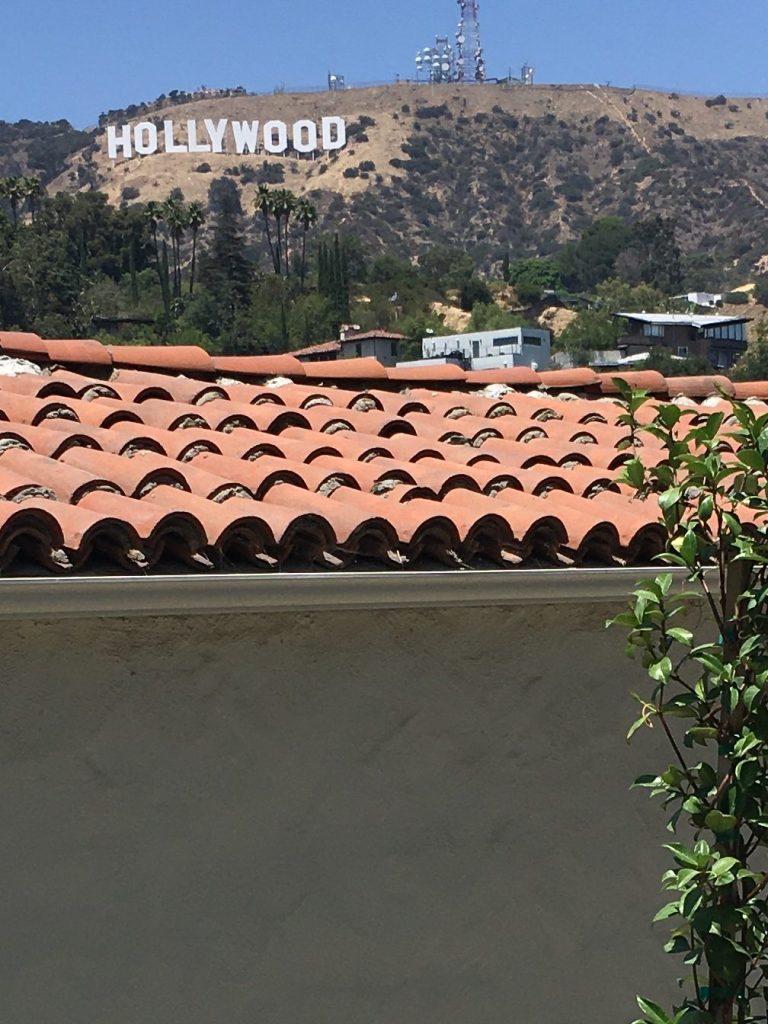
2023 Deb McCaskey Research trip to the Hollywood Museum.
I’m Deb, and after retiring from a career spent mostly writing and editing for a newspaper and then a university, I decided to write fiction like I had always wanted to but didn’t, knowing it was not a practical way to make a living.
So here I am, the author of … one book, so far. You can read the first chapter, and, if you like it, you can find the whole thing as an e-book at Barnes & Noble, and also as an e-book or paperback at Amazon. And if you don’t like it, well, has there ever been anything or anyone everyone likes, with the possible exception of puppies or Dolly Parton?
I write slowly, mostly to amuse myself — though my husband may argue with this notion after hearing all that swearing from behind my computer screen. He is my willing accomplice in researching the era, 1930s Hollywood, that we both find fascinating. It gives me an excuse to read about the likes of stars like Carole Lombard and David Niven, and directors like George Cukor and Howard Hawkes. And it gives us travel goals as we visit places like Forest Lawn Memorial Park, the Hollywood Museum, Will Rogers State Park and other remnants of the era that still exist in and around Tinsel City.
At this writing I am working on a second book featuring my heroine Frankie Franklin. No ETA yet but when there are updates, you’ll find them here.
There were a couple dozen polo fields in and around Los Angeles, but this was my favorite, at Clay’s showplace ranch in the Valley. Clay was my best friend, and the place was like a second home to me. Its ranch was cozy in the winter and cool in the summer, its riding trails familiar as the back of my hand, its memories of summers and holidays precious. I even kept my own horse here in the lavish stable he had built last year, which I called his horse palace.
– Starcrossed, work-in-progress, by Deb McCaskey
2025 Deb McCaskey
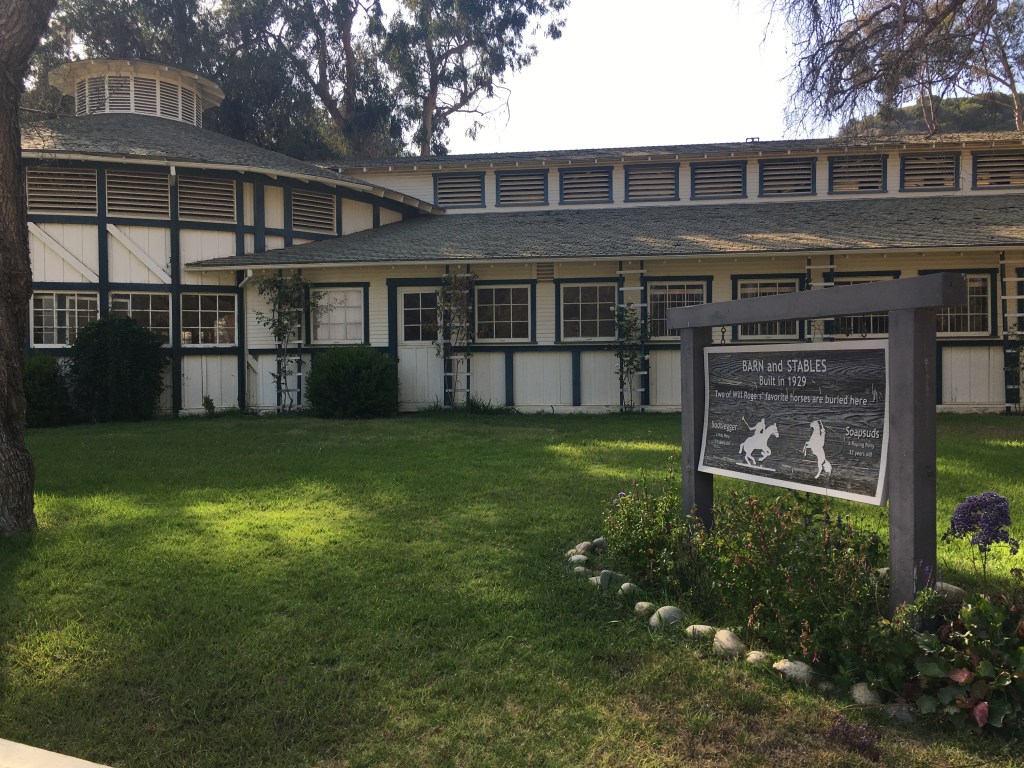
The barn at Will Rogers State Historic Park, from a visit in 2022.
As I write, wildfires are raging in Los Angeles County, with fire crews just starting to get them contained. Whole neighborhoods have been leveled, the destruction described as looking like a bomb had hit. More than 100,000 residents are under evacuation orders, and at least 11 people so far are known to have died. The last estimate placed damages at as much as $150 billion. Both of those numbers will, we know, go up.
Meanwhile, opportunistic and shameless politicians and supposed “leaders” have been flinging around unfounded accusations about what caused the fires or made them harder to fight – but since this site and blog are not for political purposes, that’s as much as I’ll say about that.
Here in northern California, and around the world, people are worried for their families and friends who live in the southern part of the state. Los Angeles has residents who originally came from – well, everywhere. And no matter where you live, you’ve seen many Los Angeles locations in hundreds of movies and TV shows. So I think these fires feel somehow personal to many of us, no matter where we are.
I’m finding it hard to comprehend the magnitude of what’s happening. We drove through LA just last month, on our way to San Diego. In 2022 and 2023 we went on research trips there, our schedule packed with visits to museums, historic buildings, and neighborhoods I’m using in my novels.
My stories – one published, one being written – take place in the 1930s. One entertaining challenge in research has been to find places from that era that haven’t been torn down in a city that took a long time to appreciate its own history. Many of those sites are in downtown Los Angeles, which hasn’t been in the fires’ paths.
But many historic buildings have been destroyed. My favorite, of all the sites we have visited, was among them. The house and stables at Will Rogers State Historic Park have been lost.
A couple of posts ag0 (scroll down), I wrote about our visit there, where the guide was happy to answer our every question and seemed surprised and delighted that we knew so much about a celebrity cowboy who had died so long ago. It was wonderful to know that Will Rogers’ widow had donated it to the state park system so that later generations could step back in time and see how he had lived.
When I heard the fires had reached the park, I hoped it was just the hills and brush nearby. When I heard the fire had destroyed the house, I hoped the stables had survived. But they too burned.
As I mentioned in the earlier post, I modeled the ranch of my heroine’s singing-cowboy friend on the Rogers place: the cozy ranch house, the view of the polo field from the front porch, the stable with its covered circular ring. The main difference was that Clay West’s imaginary ranch is in the San Fernando Valley, and the real-life Rogers ranch is in Pacific Palisades.
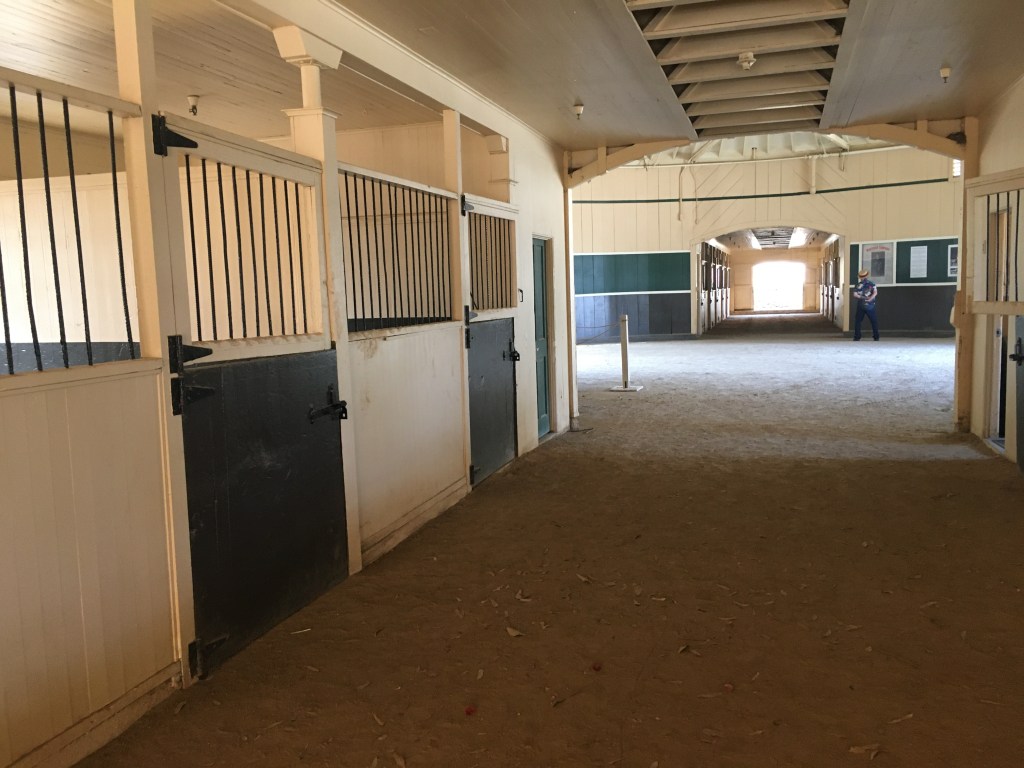
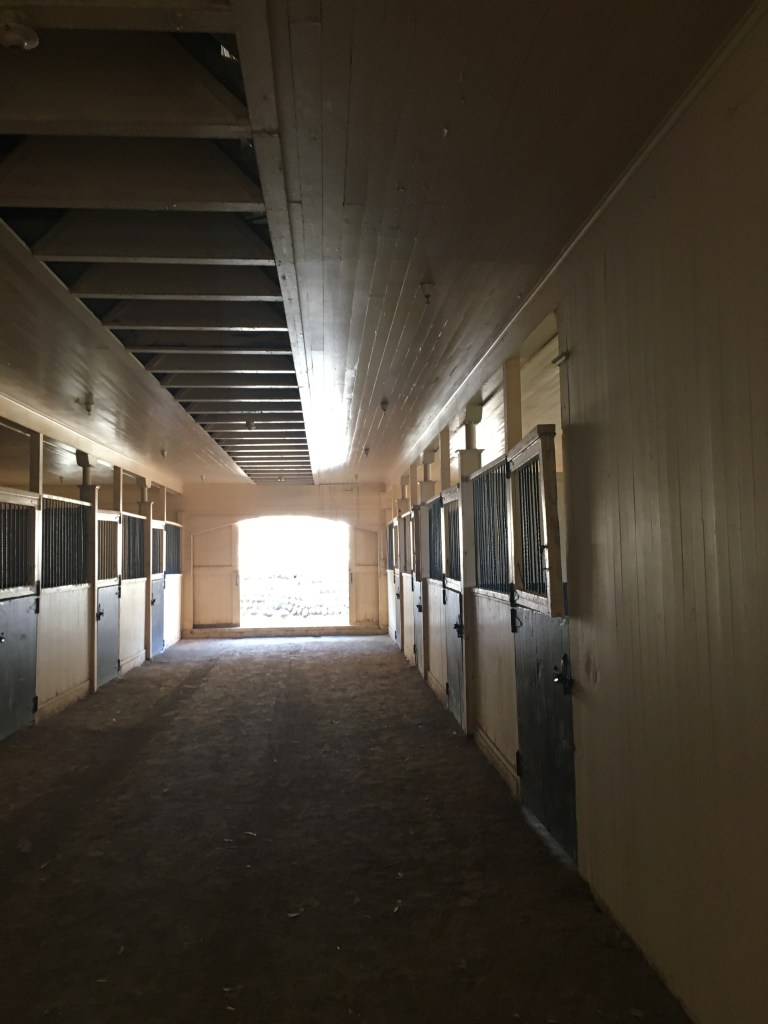
In this post I wanted to share some photos of the “horse palace,” one of the nicest old stables I’ve ever seen. Wings of stalls extended from a rotunda where horses could be saddled and groomed and even ridden indoors in bad weather. It was airy and open and welcoming.
2024 Deb McCaskey
Above, clockwise from top left: stable aisle with a glimpse of the circular ring; the rotunda ceiling and skylight; more stalls; a view of the barn on the road up from the ranch house.
The stables and house captured the imaginations and affection of many lovers of horses and history. I’m glad I have the memories from our visit, and that so many photos, taken by so many photographers over many years, still exist. They’re all we have left. It’s much too early for any thoughts of possible restoration.
Architectural plans and some great photos from Rogers’ time are on the state parks page about the stable, along with a quote from his son, Will Rogers, Jr.:
“This was the horse center of our ranch – this was the reason that Dad bought the ranch, and the large price so that he could have horses, so he could have polo, so he could have his roping, so he could have his relaxation. And if you do not see the stables, you really have not seen one of the major purposes of my father’s purchasing this place…you can only get an impression of this place if you go up and visit the stables, because that was the center of activity when my father was here.”
2024 Deb McCaskey The Bronson Caves. You’ve seen them – a lot
Wow. Where did 2024 go?
For that matter, where did the rest of 2023 go?
Can it really be that the last time I wrote a post it was exactly a year ago?
Well, yes. Yes, it can.
What’ve I been doing besides writing for this website?
Life. You know.
Actually I’ve been proving beyond a doubt that the old saying is absolutely true: You can be busier after you retire than when you were working.
I have also learned something else about retirement that explains why so many of us are busier, and wondering how we got anything done while still working: Friends.
Generally one retires at an advanced age – and believe me I know just how lucky I am to be able to retire. In this country with the economy and government we have, many people just can’t. So, gratitude. A lot of it.
Retired or not, when you reach your late sixties and early seventies, you realize your roller coaster has just topped that first big hill and has paused long enough for you to contemplate your fate. You realize that from here on, it’s all downhill, with some unexpected and stomach-lurching turns and drops before the ride is over.
I don’t care much for roller coasters.
The difference between life and roller coasters is that you don’t tend to lose fellow passengers along the way. Life is more like a thrill ride that’s out of control and where the people around you start flying out of their seats, never to be seen again, often when you least expect it.
OK, enough with the metaphors. What I’m talking about is friends. You see them getting older and older, dealing with more and more difficulties, and you realize they are not always going to be there to call, visit, lift a glass with. If you’re lucky enough to have gotten to this age without losing most of them, you still know there is no guarantee any of you will still be around tomorrow, or next week, or next year.
So you make as much space as you can to see those folks you care about. Each minute becomes precious and you prioritize time together.
That said, I actually have been working on the new book, which will be called Starcrossed. I’m very close to having a first draft completed – which means there’s still a lot of editing ahead. Progress, slow progress, is happening.
We’ve also done more research travel, so I’ll catch up here with a bit more from our 2023 trips. Starting with …
The Bronson Caves
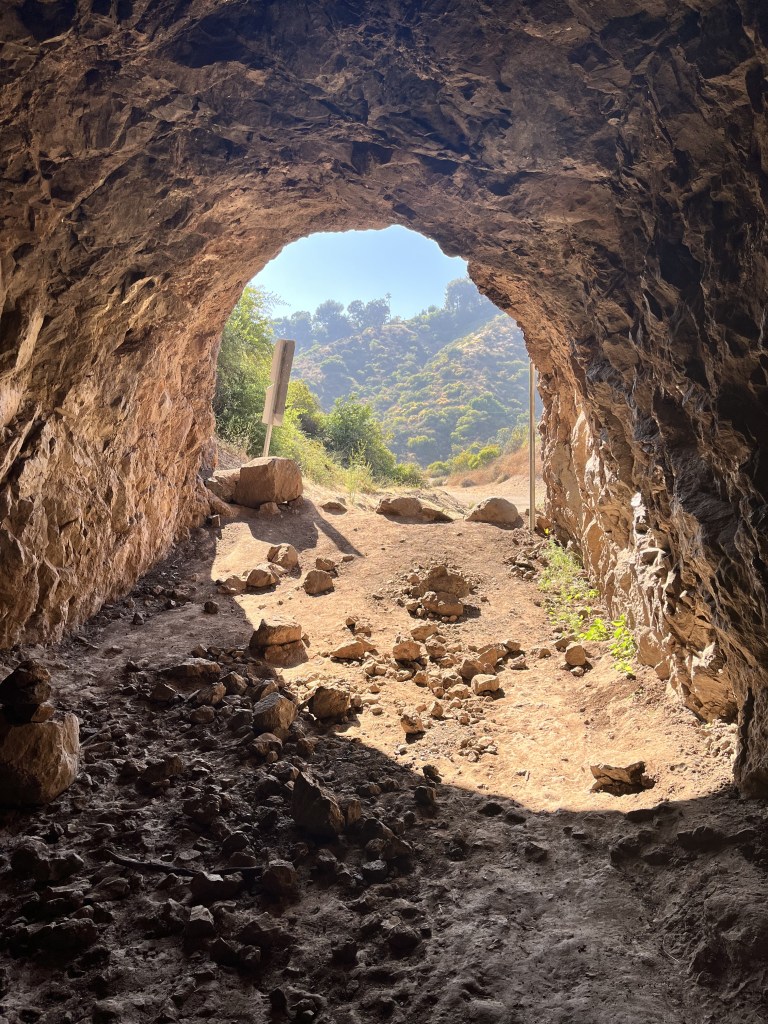
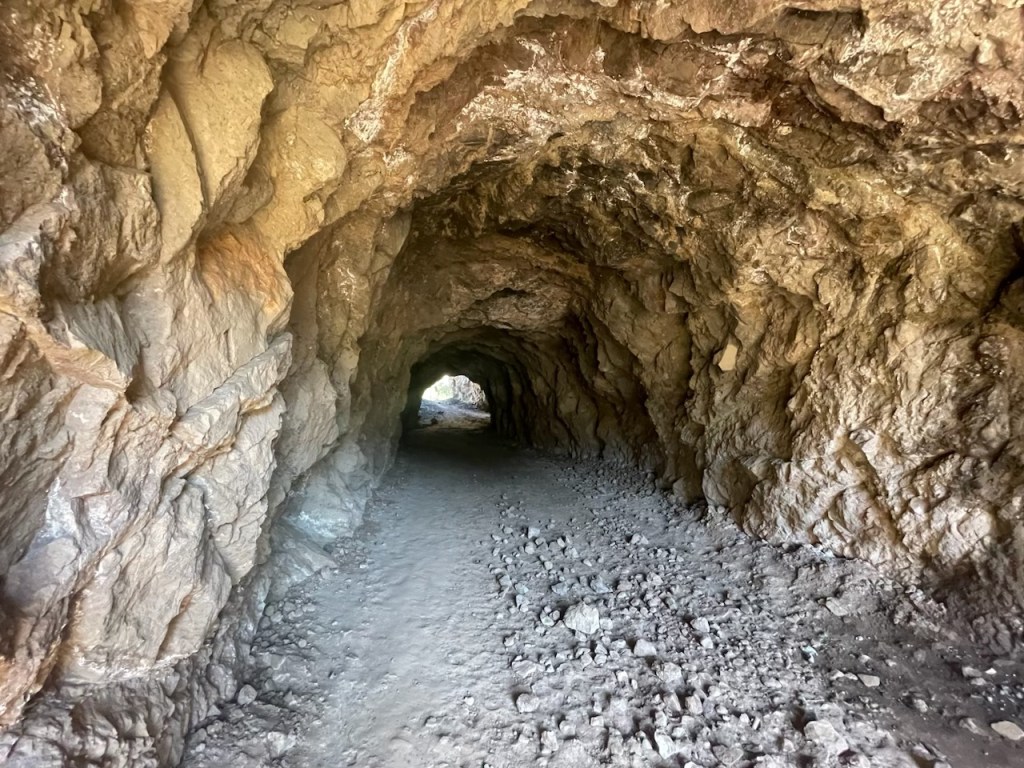
Anyone interested in filming locations wants to see the Bronson Caves. They’ve been used in hundreds of movies and TV shows, usually as part of a remote wilderness area, and sometimes as a whole other planet. Star Trek, Batman, The Lone Ranger, Combat!, Gunsmoke, The Searchers, Flash Gordon, Hail, Caesar! …the caves offer a lot of shooting possibilities just a short drive from most studios.
2024 Deb McCaskey
One of the most famous scenes is from The Searchers (1956), where John Wayne’s character finally catches up with his niece, played by Natalie Wood, and you think he’s going to kill her, but – OK, no spoilers from me, even with a movie that old.
Anyway, it looks as though they’re somewhere near a vast prairie or desert. But that’s because in the finished film, scenes of actual vast wilderness – which might be hundreds or thousands of miles away – are edited together with scenes of the caves so it all looks like one setting. Movie magic!
And remember the old Batman TV show? Guess where the entrance to the Batcave was shot.
2024 Deb McCaskey
In reality, the Bronson Caves are not in a true wilderness and are not caves. They’re a couple of short tunnels, the remains of an early 20th-century rock quarry, and are in Griffith Park, just across the I-5 from Glendale. The caves are a shortish hike from the parking lot.
Even though it’s not wilderness, the first thing we saw after leaving our car was a small pack of coyotes trotting down the street. Two kept on their way while another stopped to look at us briefly before joining its friends. Hollywood coyotes.
We shared the road to the caves with only a few other hikers, all from out of town (we asked), but by the time we got there we had the place to ourselves. It’s pretty quiet if no film crews are around.
2024 Deb McCaskey
Not many hikers actually went to the caves – there are other things to do in the park – but as we approached, a group of boys came through the tunnel, talking animatedly. Nice kids. I couldn’t help but wonder if they were scouting locations for their own movie, like young Spielbergs. We poked around, admired the way the light came in, and discovered the stone labyrinth beyond the caves’ back entrance.
It’s easy to picture the scenes from familiar movies and shows, once you’re standing in the caves, and they do exert a certain pull on the imagination. Even when you’re right there, and you can see how small and non-wild they actually are, it’s like when a magician shows you how one of their tricks works.
You see what’s behind the illusion. And yet, you still want to believe.
The second book? It’s coming along. Slowly. I write slowly. Wait, that’s not quite right. I write fairly quickly – I just think of what to write slowly.
I can tell you the title: Starcrossed. And I can tell you that it opens at a polo match. There was an era during Hollywood’s Golden Age when stars, studio heads and others in the movie industry were crazy for polo. There were something like 25 polo fields in the 1930s in the Los Angeles area. And my heroine, motion picture star Frankie Franklin, of course, plays.
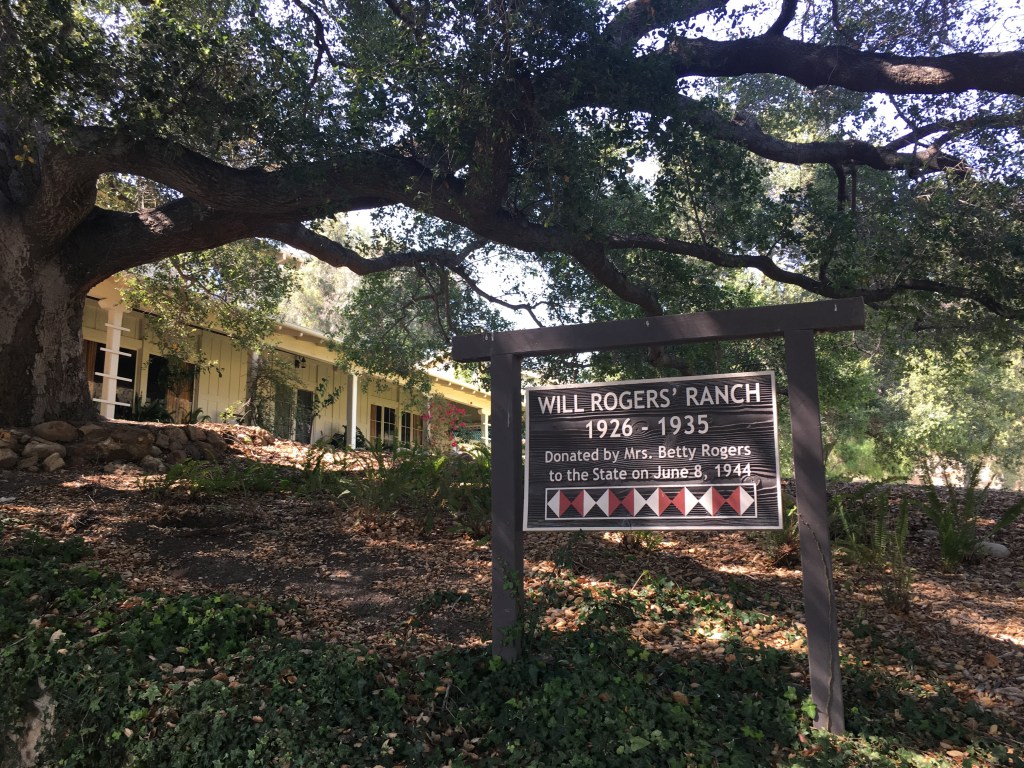
Most of the fields are long gone, but one survives at Will Rogers Historic State Park, once the private ranch of America’s “poet lariat.” We visited on our 2022 research trip, and with the beautifully preserved ranch house, the stable and the polo field, we found our imaginations effortlessly swept back to the time when Will himself lived there on the ranch in Pacific Palisades. He had it built in the 1920s, and he lived there until his death in a plane crash in Alaska in 1935. We have his widow, Betty, to thank for its continued existence. She donated the ranch to the California State Parks in 1944.
2024 Deb McCaskey
A visit to Will Rogers State Historic Park takes you back to the 1930s.
It was his refuge, where he could entertain guests, and ride, rope, and play polo. Preserved in the park are the ranch house, the stable, a riding arena, and a regulation polo field where the Will Rogers Polo Club still plays from April to October. Trails wind through the hills high above Sunset Boulevard and offer hikers views of the ocean.
Rogers was the highest-paid entertainer in the early 1930s, and was a popular newspaper columnist as well as a movie and radio star. His skill with a rope was legendary; the small visitor center in the garage of the guest cottage shows film clips of some of his feats, such as throwing three lassos at once and roping a horse and its rider.
Rogers’ humor was topical, but also timeless. Consider: “I’m not a member of any organized political party. I’m a Democrat.” And: “Everything is changing in America. People are taking their comedians seriously and the politicians as a joke.”
The Rogers place provided inspiration in the Stardusted world for the ranch of Clay West, the singing cowboy who is Frankie Franklin’s best friend. In particular, I loved that you can see the polo field from the ranch house, and that the beautiful stable was, as Frankie says, like a “horse palace.”
After the tour we lingered and enjoyed the rolling lawns surrounding the house, where families with kids and dogs played.
Down on the polo field, two women’s teams faced off. Not being there as a reporter, but just to absorb the atmosphere, I didn’t get the teams’ names or who won, or any of that. In my mind, I was already seeing Frankie and her friends, galloping hell-bent up and down the field after the little white ball.
You can still see polo played at Will Rogers State Historic Park.
2024 Deb McCaskey
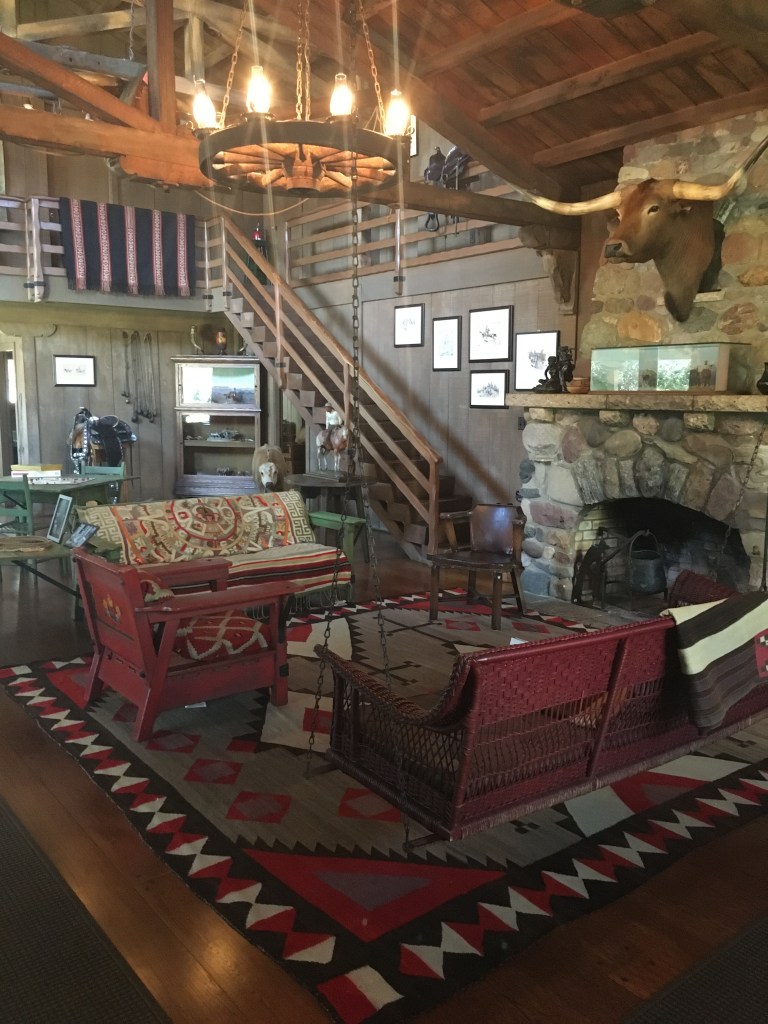
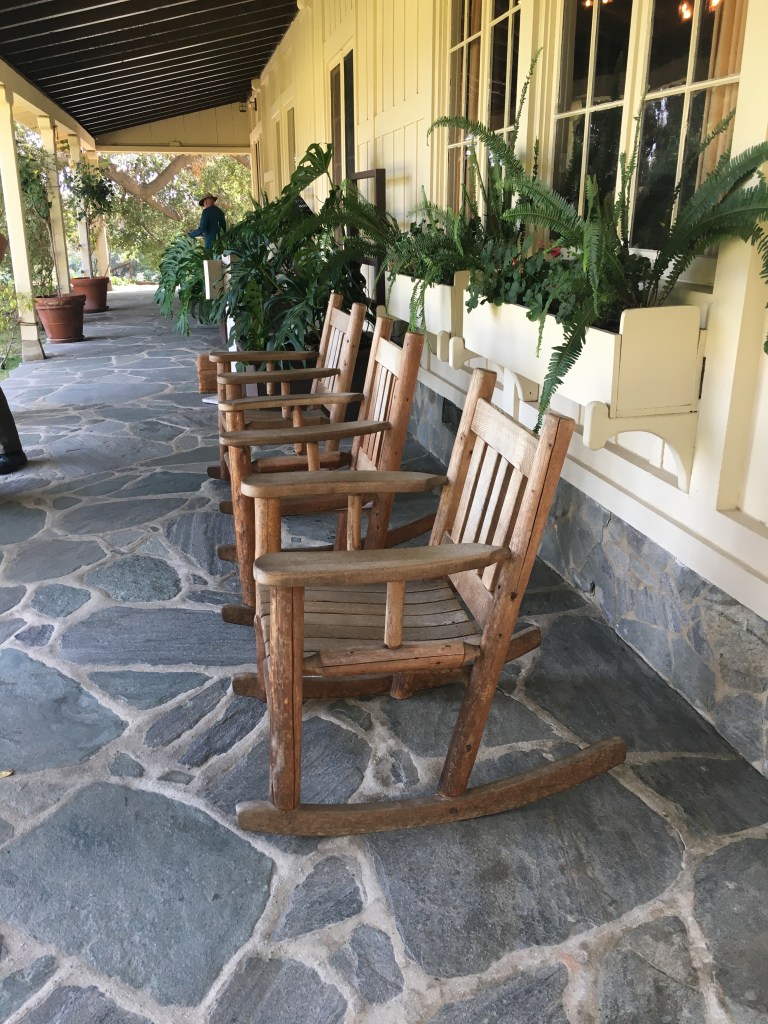
I wanted to move right into the ranch house the minute I walked in the door. Comfortable, filled with light, unpretentious, it’s about as close to a dream house as I could imagine. There’s a stone patio with a fireplace, and a line of rocking chairs on the front porch, where you can almost hear Will say, “Come on out and set a spell.”
The ranch house, front porch and patio — inviting:
2024 Deb McCaskey
2024 Deb McCaskey
You can see the house’s interior on a guided tour; our guide was knowledgeable and enthusiastic about Rogers’s life and times. We were the only folks on that particular tour, and, as tour guides sometimes do, when the questions we were asking made it clear how enthusiastic we were to learn more, he added extra time, and stories.
Our guide seemed to have a particular interest in how much Rogers loved the”Good Old Oklahoma Beans” his sister served and the fact that Rogers described them as “kinder soupy.” It seemed to say to him, and to us, that no matter how much wealth and fame Will Rogers acquired, at heart he was still a down-to-earth Oklahoma cowboy.
The recipe for Good Old Oklahoma Bean — posted near the visitor center:
It was July 4 in Glendale, and Errol Flynn didn’t have a lot to say.
Neither did Walt Disney or Jimmy Stewart or Clayton Moore, TV’s Lone Ranger. As for Humphrey Bogart and Sammy Davis, Jr., they were hiding behind locked doors.
In fact, it was downright quiet and peaceful all afternoon at Forest Lawn Memorial Park, as we drove about, stopping the rental car here and there to get out and admire the green lawns, trees, sculptures and views. And to look for the graves of stars, of course.
2023 Deb McCaskey
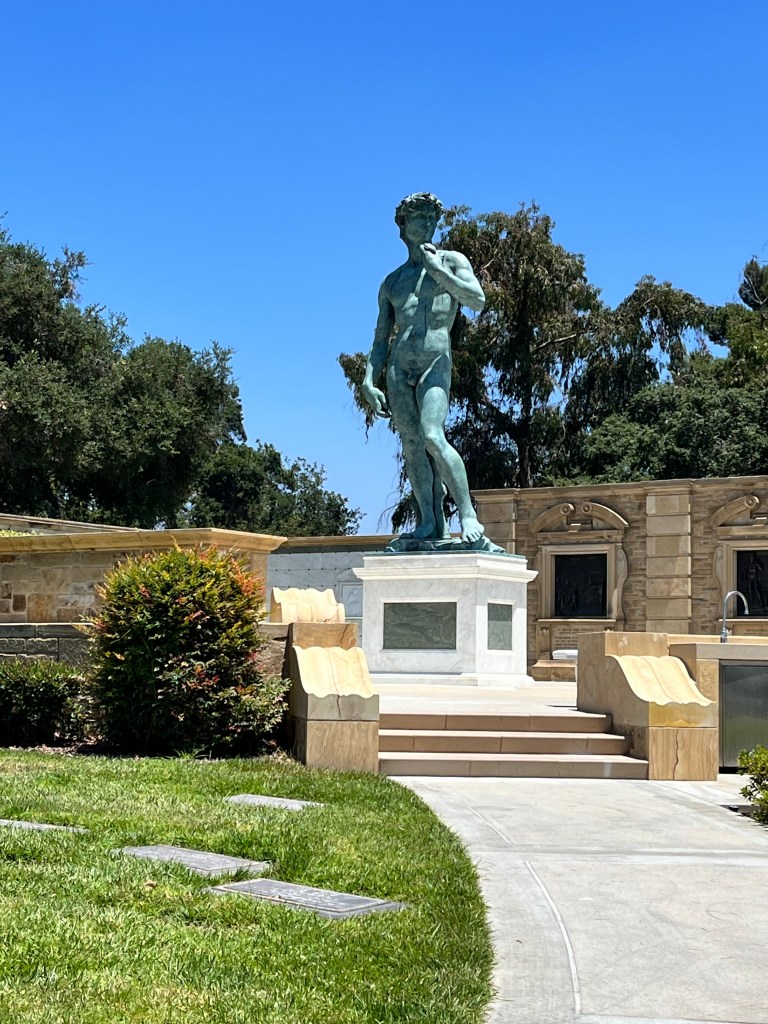
Some of the statuary at Forest Lawn Glendale — one of which is a copy of Michelangelo’s David.
At the more extroverted Hollywood Forever cemetery down on Santa Monica Boulevard, they had just observed the holiday on July 1 with fireworks and a screening of Pee-Wee’s Big Adventure. We had a family event to go to that evening, but even if we hadn’t, being in the midst of huge crowds of people – living people, anyway – is not our idea of a fun time.
But here in the quiet hills above Glendale on the Fourth, all was quiet as – well, as the grave. Lots of graves. So, very quiet. The crowds here are underground or in niches, and all the more congenial for that.
When we visited there were just a few other live folks around, all nearly as well behaved as the permanent residents. We saw a couple sitting under some trees just off the road, and a small group with lawn chairs who appeared to be having a picnic – near a loved one’s final resting place, perhaps.
Glendale is the flagship Forest Lawn location – there are six altogether in southern California – and is the one where you’re most likely to find people from the Hollywood of the 1930s, the era we like to research.
Forest Lawn opened in 1906 and was taken over in 1917 by a new manager with the idea that the traditional marble orchard was depressing and unsightly. None of that here. It’s all rolling green hills, trees, flowers, fountains, and statuary here and there – while the dead rest under discreet grave markers level with the lawn.
According to the Smithsonian magazine, this is the place that set the standard for the modern cemetery – oops, sorry, memorial park. “Park” sounds so much less, you know, deathy.
There are several churches here including the famed Wee Kirk o’ the Heather, modeled on one dating from the 14th century in Scotland. Stained glass windows in the kirk illustrate the old Scottish song “Annie Laurie” – the lady for whom the composer “would lay me doon and dee.”
All so sad and romantic.
Public domain/Wikimedia Commons – Boston Public Library Tichnor Brothers collection
The Wee Kirk o’ the Heather
Forest Lawn has also been described as the Disneyland of cemeteries, though it predates Walt’s theme park and, the Smithsonian speculates, may have inspired the great animator himself. Much less animated now, he and some family members share a walled garden with a statue of the Little Mermaid. (I know: I was hoping it would be Mickey, too.)
Getting a peek at the deathstyles of the rich and famous is not so easy here. There are no maps for sale, or organized tours, much less movie screenings and fireworks. No matter how wild and crazy folks might have been in life, they now live by Forest Lawn rules. Which I ended up thinking, you know, is fine. I’m not sure Elizabeth Taylor wants to hear from me anyway.
(Hollywood Forever, by contrast, has the maps and tours, not to mention an entire building – a pavilion – devoted to Judy Garland. Her frequent co-star Mickey Rooney is also easy to find in his crypt. But my favorite one is Burt Reynolds. His monument is a larger-than-life bust in a cowboy hat. His expression makes it seem like he would appreciate having company.)
2023 Deb McCaskey
Left, Burt Reynolds at Hollywood Forever. Right, Errol Flynn at Forest Lawn.
I could see returning here next time we’re in the area. Open space and quiet are hard to find in any city, and here you have a really big, really green, really well-tended garden where it’s nice to spend part of a warm day in the Los Angeles area, where you can find a peaceful spot and meditate on the meaning of life and death and picnics.
There’s also a museum here, with some very nice sculptures and, when we visited, an exhibit on panoramas, the large-scale art format that was all the rage in the 18th and 19th centuries. If you have a thing for panoramas, get there soon. This exhibit, “Grand Views, the Immersive World of Panoramas,” is open through Sept. 10, 2023.
A final thought: I’m not sure what one gets out of visiting graves anyway. It’s not like the folks themselves are actually, well, there. I mean, yes, if you dug them up and opened the coffin and looked in – okay, this is getting much too ghoulish.
What I mean to say is, I’m sure people’s souls (if we have them, and in my more optimistic moments I like to believe we do) have better things to do than hang around a place like this. Life reviews, spying on those they left behind, looking up old pals who died owing them money …
But if there are any ghosts around here, I expect one would be that of Errol Flynn. Very near his grave is the statue of a nearly naked woman, so close that it gives the impression that the old rapscallion is spending eternity looking up her skirt.
We’re planning another research trip. It would probably be more productive to stay home and write more of the book, but we have to be in Southern California anyway for a cousin’s 50th wedding anniversary. So we’re taking a few more days to to search out more windows on the history of the region.
The Autry Museum of the American West. The first hugely famous singing cowboy in the pictures was Gene Autry, who starred in films and on TV from the ‘30s to the early ‘50s. His pictures ignited many a kid’s cowboy/cowgirl fantasies and had little to do with real ranch life or real history. And yet, the museum he founded in 1988 now is a multifaceted, inclusive showcase for the authentic art, history and cultures of the West.
The Japanese American National Museum. I think I owe it to my characters Kit Noguchi, and her father Mr. Noguchi, to understand as much as I can about the Japanese American experience, especially in Southern California. I expect a one-day visit here will only make me realize how much more there is to learn.
The Bradbury Building. You’ve seen it in tons of movies set in Los Angeles, most famously in the first Blade Runner. It’s ornate, mysterious, mazelike – just made for noirish chase scenes. It’s just an office building, not a museum, and we understand if you don’t make too big a deal of playing tourist, you can walk in and look around.
Other places are on the list, too. We’re looking forward to some unstructured time as well, to go wherever our fancy and our rental car will take us.
It’s funny: so much of what we think we know about history, we’ve learned from the movies, for better or worse. But when you start reading and visiting and trying to learn more, you often find stories much more interesting and complicated than you expected. Certainly more nuanced than what can be crammed into a couple of hours of screen time.
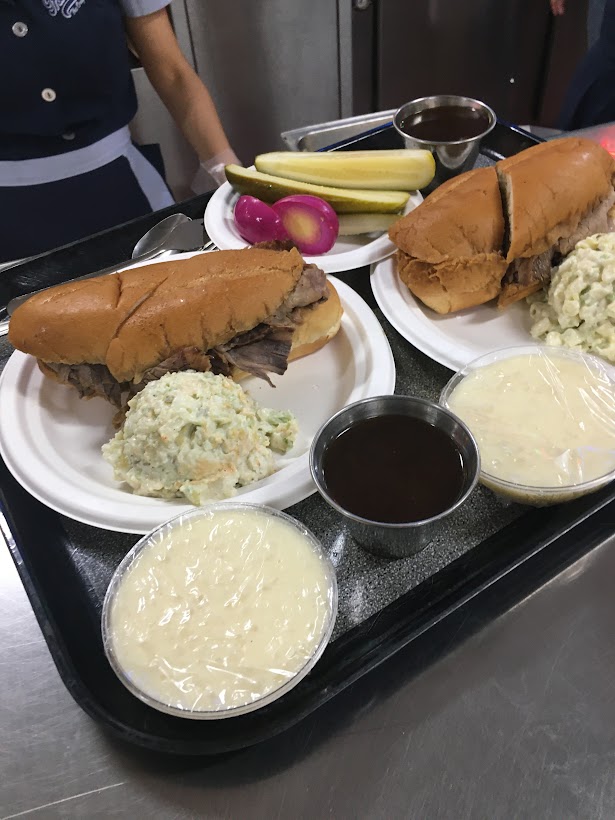
So there’s that. And of course there’s also, always, the food. I spent about 16 years writing newspaper restaurant reviews in the San Francisco Bay Area. The experience gave me an appreciation for high-end meals and ever-so-artistic presentations, but you know what? My favorite restaurants are the kind where they serve honest, simple, easy-to-understand food, like the French dip at Philippe’s, pictured here.
A brace of French dips ready for the customers at Philippe’s. A dill pickle, a lovely pink pickled egg, macaroni and potato salads round out the lunch. Tapioca for dessert, anyone?
Even though we had dinner at Musso & Frank (to get a sense of history) and Pump (because it was within walking distance of our hotel), the French dip at Philippe’s was, hands down, my favorite meal of the trip.*
But wait – two places claim to have invented the French dip. (Though you have to ask, how hard could that have been? It’s sliced roasted meat, inside a French roll, and you dip it in the roasting juices. Doesn’t get much simpler than that.)
Now we must, absolutely must, try the other place where this iconic sandwich might have first been served: Cole’s, which is more of a saloon, from what I can tell. Works for me. I want to go for the dip but also to admire the neon sign.
The trip is some weeks away, and I hope to spend at least some of that time finding out and writing down what Frankie and her friends have been up to, so I can eventually share it with you.
*Quick take on atmosphere. We actually enjoyed the vibe more at and around Philippe’s — the downscale, working-class neighborhood felt authentic and was far less grating on the nerves than the noise and partying on Hollywood Boulevard outside Musso’s door. As far as Pump goes — I loved the garden-room decor but the place was so loud we asked to be moved to a quieter table. We were moved, graciously. But it was still loud at the new table. I had steak with bearnaise at Musso and some kind of fish at Pump — neither were as memorable at the sandwich at Philippe’s.
OK, to be totally honest, I didn’t know I appreciated Angela Lansbury until she died yesterday, at the age of 96.
Like so many of her generation, my parents’ generation, she was just always … there. There would be plenty of time to catch her. She would always be in another TV show or movie. Just like our parents would be home when we decided to visit. They were always there. Until they weren’t.
Sometimes you miss them more, remembering them years after they pass, than you did right at the beginning. Maybe immediately afterward, the loss is too new to process, or they were in pain or kidnapped by dementia and it was a relief, or maybe the relationship was so complicated you don’t know how to feel for a long time.
That’s with close-by loved ones, anyway. With entertainers, if we liked them, there may be nothing but great memories. We’re sad to lose them, but really, when they’re approaching 100 … maybe it’s more the passing of the era they represented that we feel sad about.
And she was around longer than many others, in a career that lasted seven decades. She is not one of those I’ve researched because she was actually too young to be part of the world in the stories (I swear there will be a second one, at least) I want to tell. Born in 1925, she was only about 10 at the time of Stardusted.
When I think of Lansbury I first think of Mrs. Potts in Beauty and the Beast – no one sang “Tale as Old As Time” better. I get teary every time I hear her slightly cracked, world-weary but beautiful voice singing it.
In NPR’s story , she hints why: “ ‘I’m not really a singer,’ she admitted. ‘I have a serviceable voice, but how I use it — it’s the emotion under the note that sells the song.’
And boy, could she sell it. I never saw her in Mame, but I can only imagine she sold all those songs, too.
I hadn’t remembered she was in Gaslight, as a maid, until I saw it recently. (Pretty heady stuff, being directed by George Cukor in your very first role! She earned an Oscar nomination for it, too.) And I can still hear her saying, “Chadwick, give mama some sugar” as Elvis Presley’s Southern belle mom in Blue Hawaii.
Like a relative you like when you see them once in a while at a family gathering but don’t really think of the rest of the time, she always added value to the occasion. Always welcome, always charming–she was even evilly charming as the mother in The Manchurian Candidate.
But one role I never saw her in, not once, was that of Jessica Fletcher in Murder, She Wrote. Which is funny, I guess. If you’re trying to write mysteries, you might think you would want to watch shows about people who write them–even if they are far more prolific and successful than you are–for inspiration.
But I have not seen even one episode of Murder, She Wrote. When I’m trying to write my own stuff–with life getting in the way in a new way every single damn day–the last thing I want is to watch someone gaily, effortlessly doing the thing that I can’t seem to get done.
Nor do I want to unconsciously pick up and copy a scene, a plot twist, or dialogue from a show without realizing it.
But now that I think about other times I’ve been happy to see Lansbury, maybe–after I’ve gotten a first draft done and have put it away for the recommended few weeks before starting to edit–I’ll finally pay her a visit in Cabot Cove.
In the days of the silents, filmmaking was still, as this NPR piece notes, a cottage industry, and the number of women who were important writers, directors, editors and producers was much larger than most of today’s moviegoers realize. Once movies became a big, lucrative industry, women were pushed out of most roles other than that of actress. It would be decades before women once more had the chance to tell the stories they want to tell in those prominent behind-the-camera positions.
Most of the films themselves are long gone, the film stock itself deteriorated or the reels lost to fire or other events, but thanks to collector Dwight Cleveland, we can get a glimpse of them in the lobby cards and scene cards–“static trailers,” as the exhibit curator calls them–on display through Oct. 9 at Poster House in New York. Cleveland noticed and then started concentrating on, the contributions of women to early cinema, and this exhibit gives a glimpse into a vanished world. If you happen to be in or live in the area, Experimental Marriage: Women in Early Hollywoodlooks like it would be well worth any movie-lover’s time.
If you’ve visited this page recently, you might have taken a look at the date of the most recent posts (before this) and thought, hm, okay, dead website.
Me, not writing
And while it’s true that I don’t post terribly often, the reports of the site’s death (if anyone thought it worth reporting), would be greatly exaggerated.
There are reasons. Maybe you’ll find them boring, maybe not, but there are reasons.
Reason 1: Every time I’ve thought I should write a post for the page, the little editor inside me looks over her reading glasses at me and says, “Dear, if you’re going to write, shouldn’t it be writing the next book?” And since I always listen to editors–even imaginary, inside-my-head editors–I took that to heart. Trouble is, the writing has been … um … slow.
Reason 2: Lockdown. We had–have–a pandemic going on. You’d think the 2020 lockdown would give one tons of time to write. And it did. But I didn’t. Much. Otherwise I’d be telling you all about the next book, obviously. And now I guess the coronavirus and its variants are endemic, but still we’re all going out again and feel like there’s a lot of catching up to do. And that brings us to …
Reason 3: Life. Yeah, all that catching up to do. Anyone who needs to get work done that’s solitary–music, art, writing–has discovered the socializing and creating don’t mix so well.
So I’ve been catching up with friends, having lunches, even taking on a temporary, part-time, remote (gluten-free, low-fat, nondairy) job, mostly because an old colleague asked me to.
And you know what nearly all those friends are asking? “When’s the next book coming out?”
My answer in my head is something like, “You tell me and we’ll both know.” Which would be pretty smartass of me.
All I can tell you is, it’s coming along. It has Frankie, of course, and Max, Clay and Sam, Mr. and Mrs. Monty, Mr. Noguchi and Kit Noguchi, Mr. Wiseman, and a few new characters. And, of course, Frankie’s self-satisfied Persian cat, Major Bowes, and her gallant Thoroughbred mare, Rocket. And I’m pretty sure this one will be called Starcrossed.
I’ll say it’s coming out by the end of the year. But don’t hold me to that.
Meanwhile, my loyal sidekick and husband, Ralph, and I did a quick research trip to visit some of Frankie’s haunts in Hollywood. Here are some pictures!
“My home, way up in these hills, just off Beachwood Drive, felt worlds away from the strange community in which I worked …”
“You don’t really want me to leave, do you?” “I’m pretty sure I do,” I said. “I’d like to be alone.” “After what happened?” he said. “I thought we could talk. You know, if you needed to.” “I’ll be fine.” “You’ve had a traumatic experience. People need to talk after traumatic experiences,” he said I didn’t think I needed to talk. But maybe I needed a distraction. I felt my resolve giving way. He moved toward the cocktail bar and picked up a bottle of Campari. “Negroni?” “Thanks,” I said, resistance gone. “Well played, sir.” He did make an excellent Negroni. And he had made it clear, he wasn’t going anywhere.
— Stardusted, Chapter Four
Back in the days when we could still get together with friends for drinks at a restaurant or bar (I am writing this while in quarantine during the coronavirus pandemic, and no one with common sense has gone anyplace crowded for months), I used to find myself dithering when the server asked what I would like. I’ll admit to letting it figure into my decision what the drink would say about me–how’s that for shallow? Why not just order something I liked?
This Negroni seems to have lost its orange twist–but isn’t the light pretty?
Trouble was, I didn’t really know what I liked in the way of cocktails. I didn’t come from a family that drank them–well, except for Aunt Adeline and Uncle Whitey, whose parties featured a constantly running blender turning out pale green Grasshoppers … unless it was Pink Squirrels. Not exactly classics; at least not since the ‘60s.
My mom didn’t drink and my dad liked beer until he discovered the Tom Collins –which, from the recipe I just now looked up, seems to be basically gin-spiked lemonade.
Anyway, these memories did nothing to help when I was standing or sitting there and my friends were ordering glasses of white wine or gins-and-tonics or whatever. What did I want? What did I like?
I needed, I figured, a signature cocktail. Like when you think of the gals on Sex and the City, you think Cosmopolitans (pardon me, but, ugh). Like when you think of James Bond you think of martinis, shaken not stirred (now we’re talking). Like when you think of Hunter S. Thompson you think of rivers of Wild Turkey (that might be going a bit far).
Maybe 11 or 12 years ago, I decided to go about this logically. I remembered a friend who liked to drink Campari and sodas, and I remembered I also liked the rather bitter liqueur when he’d let me taste it. So I started looking up “cocktails with Campari.” And that’s how the Negroni entered my life.
Bitter and sweet, cold and bracing, it’s one of those cocktails that forces you to take it slowly, and savor it. And it’s so strong that unless you’re in total self-destruct mode, you know you can only have one of them, especially if there’ll be wine with dinner.
We bought Campari, we bought gin, we bought sweet vermouth. And my husband, ace amateur mixologist, whipped up a Negroni for me. Love at first sip. I had found my signature drink.
Usually I’m behind the curve on trends but it turned out I was just slightly ahead of the Negroni curve. I would often ask for a Negroni at a restaurant only to find out they had no Campari.
That’s hardly a problem anymore. (The Daily Beast has an excellent story about the rise of the Negroni–and gets extra points for somehow working Patrick Stewart into the piece.)
And when I decided my heroine Frankie Franklin needed a signature drink, too, it seemed only fitting we should share this one. Since it was invented before 1920, it was certainly something a sophisticated young star would know about–especially one whose cowboy father knew its inventor, the Florentine Count Camillo Negroni, who spent some time cowboying himself. (You can see why research is so captivating.)
And of course Max, Frankie’s significant other, also makes a mean Negroni. Like this:
THE NEGRONI COCKTAIL
1-¼ ounces Campari
1-¼ ounces sweet vermouth
1-¼ ounces gin
Combine the Campari, vermouth and gin in a an old-fashioned or rocks glass, with ice. At this point you can either serve it right in that glass or strain it into another glass, stemmed or not, preferably chilled. Garnish with an orange twist. My husband, being an artist, sometimes peels a lemon, instead, in one continuous strip and fashions it into a rose-shaped garnish. (Yep, he’s a keeper.)















 Deb McCaskey